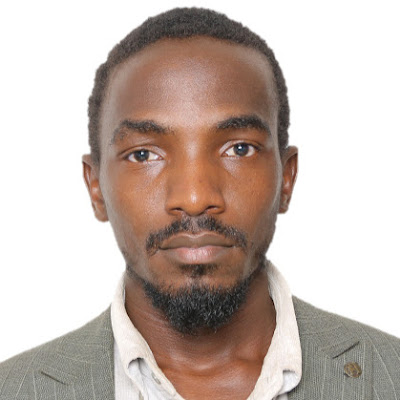
Creator of ML++
Self-Taught Computer Scientist • Philosopher • Mathematician • Entrepreneur
Francis Ssessaazi is a self-taught polymath whose journey spans computer science, philosophy, and mathematics. As the creator of ML++, a revolutionary programming language that extends C++ with native AI/ML capabilities, Francis represents a unique blend of theoretical depth and practical innovation. Based in Kampala, Uganda, he is the founder and CEO of three pioneering companies that span software development, aerospace technology, and healthcare systems.
🎓 Self-Taught Mastery
Francis's journey is a testament to the power of self-directed learning. Without formal computer science degrees, he has mastered operating systems design, compiler construction, AI/ML engineering, and built production systems serving thousands of users. His philosophical and mathematical foundations inform his approach to language design, resulting in ML++'s elegant synthesis of theory and practice.
"The intersection of computer science, mathematics, and philosophy isn't just academic—it's where breakthrough innovations like ML++ emerge. Understanding the 'why' behind computation is as important as mastering the 'how'. This multidisciplinary foundation allows me to see patterns others miss and create solutions that are both theoretically sound and practically useful."
— Francis Ssessaazi
Software development company specializing in cutting-edge AI/ML solutions, web applications, mobile development, and ERP implementations.
Aerospace technology company developing innovative solutions for aviation, flight planning, and aerospace systems.
Healthcare institution where Francis has developed comprehensive digital solutions including patient portals, doctor dashboards, and delivery systems.
Since 2019, Francis has been building a diverse portfolio of projects spanning multiple industries. With deep expertise in React, Flutter, C++, Python, and various web technologies, he has consistently demonstrated a passion for building comprehensive systems from scratch with extensive documentation. His work encompasses healthcare platforms, educational systems, government contracts, and business automation solutions.
Francis's journey into language design began with a fundamental question: "Why should AI/ML development be constrained by runtime type checking and lack of compile-time guarantees?" This question led to the birth of ML++, a language that maintains 100% compatibility with C and C++ while adding powerful, compile-time AI/ML features.
Notable Projects & Achievements:
"AI/ML development should not be limited to Python's runtime overhead or C++'s lack of native ML constructs. We need a language that combines C++'s performance and type safety with native, compile-time AI/ML features. ML++ is that language—it's C++ evolved for the AI era."
ML++ introduces revolutionary features like tensor comprehensions, Einstein summation notation, gradient blocks, and layer composition operators—all while maintaining the elegance and power of C++. The language is designed to make AI/ML development as natural as writing traditional C++ code.
From Uganda to the world, ML++ aims to democratize AI/ML development by providing a tool that combines academic rigor with practical utility. The language serves both researchers pushing the boundaries of ML and engineers deploying production systems.
"When I started working on ML++, I asked myself: Why should we accept runtime errors in production when we can catch them at compile-time? Why should we tolerate Python's slow execution when we have C++'s performance? Why should neural networks be library abstractions when they can be language primitives? ML++ is my answer to these questions—a language that respects the power of C++ while embracing the future of AI."
— Francis Ssessaazi, Creator of ML++
Francis Ssessaazi • 2024 • arXiv preprint
This foundational paper introduces ML++, a true superset of C++ that adds native tensor types, automatic differentiation, and neural network constructs. We demonstrate how compile-time shape verification eliminates an entire class of runtime errors while maintaining zero-cost abstractions. The paper includes formal grammar specifications, type system proofs, and performance benchmarks showing parity with hand-optimized CUDA code.
Francis Ssessaazi • 2024 • Submitted to PLDI 2025
We present tensor comprehensions—a novel syntax extension that brings Python-like list comprehensions to compiled languages while enabling aggressive compile-time optimization. Our approach allows developers to write high-level, readable code that compiles to performance-optimal GPU kernels. Benchmarks show 2-3x speedup over equivalent hand-written loops through automatic vectorization and fusion.
Francis Ssessaazi • 2024 • In preparation for ICML 2025
We introduce gradient blocks—a novel syntax for automatic differentiation that makes gradient computation explicit and type-safe. Unlike implicit autodiff systems, gradient blocks allow developers to precisely control when and how gradients are computed, leading to better performance and easier debugging. We show how this approach enables compile-time gradient optimization and eliminates common autodiff bugs.
Francis Ssessaazi, Cognosphere Research Team • 2024 • Submitted to MLSys 2025
This paper addresses the notorious Python-to-production problem in ML engineering. We demonstrate how ML++ enables seamless transition from research to deployment by providing a single language for both experimentation and production. Case studies include deploying transformer models on embedded devices and real-time inference systems, with 10-100x latency improvements over Python-based solutions.
Francis Ssessaazi • 2024 • Submitted to NeurIPS 2025
We present a novel approach to neural architecture design through algebraic composition operators. ML++'s operators (>>, ||, +>, *>) enable intuitive construction of complex architectures through mathematical expressions. We show how this approach not only improves code readability but also enables automatic architecture optimization and neural architecture search at compile-time.
Deep understanding of OS internals, process management, memory systems, and kernel design principles.
Extended LLVM/Clang with ML++ language features, custom AST nodes, type checking, and MLIR integration.
Novel optimization passes for tensor operations, automatic differentiation, kernel fusion, and shape inference.
Created sophisticated type system with compile-time shape verification, tensor type inference, and dependent types.
Designed and implemented comprehensive ML++ standard library with neural network layers, optimizers, and loss functions.
Built transformer models, speech recognition engines, and neural architectures entirely from first principles.
ML++ works seamlessly across CPU, GPU (CUDA/ROCm), and TPU with unified compilation and optimization.
Created design systems (Selaf), React component libraries, and Flutter applications for healthcare and enterprise.
Authored comprehensive documentation, research papers, language specifications, and educational content.
Francis launches his entrepreneurial journey, founding Cognosphere Dynamics Limited and beginning work on diverse software projects.
Development of comprehensive digital solutions for Good Shepherd General Hospital, including patient management systems.
Founded Trajectory Inc to develop aerospace technology solutions and flight planning systems.
Francis begins exploring compiler design and questions why AI/ML lacks compile-time safety guarantees. The concept of ML++ is born.
First working prototype of ML++ compiler with basic tensor types, shape verification, and automatic differentiation.
Revolutionary features implemented: tensor comprehensions, Einstein notation, gradient blocks, layer composition. Research papers submitted to top conferences.
Expanding Cognosphere, Trajectory, and Good Shepherd Hospital systems. ML++ community adoption and continued innovation.
Interested in collaborating, have questions about ML++, or want to discuss AI/ML language design?
Software Development
AI/ML Solutions
Kampala, Uganda
Aerospace Technology
Flight Planning Systems
Innovation in Aviation
Healthcare Systems
Digital Solutions
Patient Care Technology
Founder & CEO
Chief Architect - ML++
Leading innovation across Software, Aerospace & Healthcare